Introduction
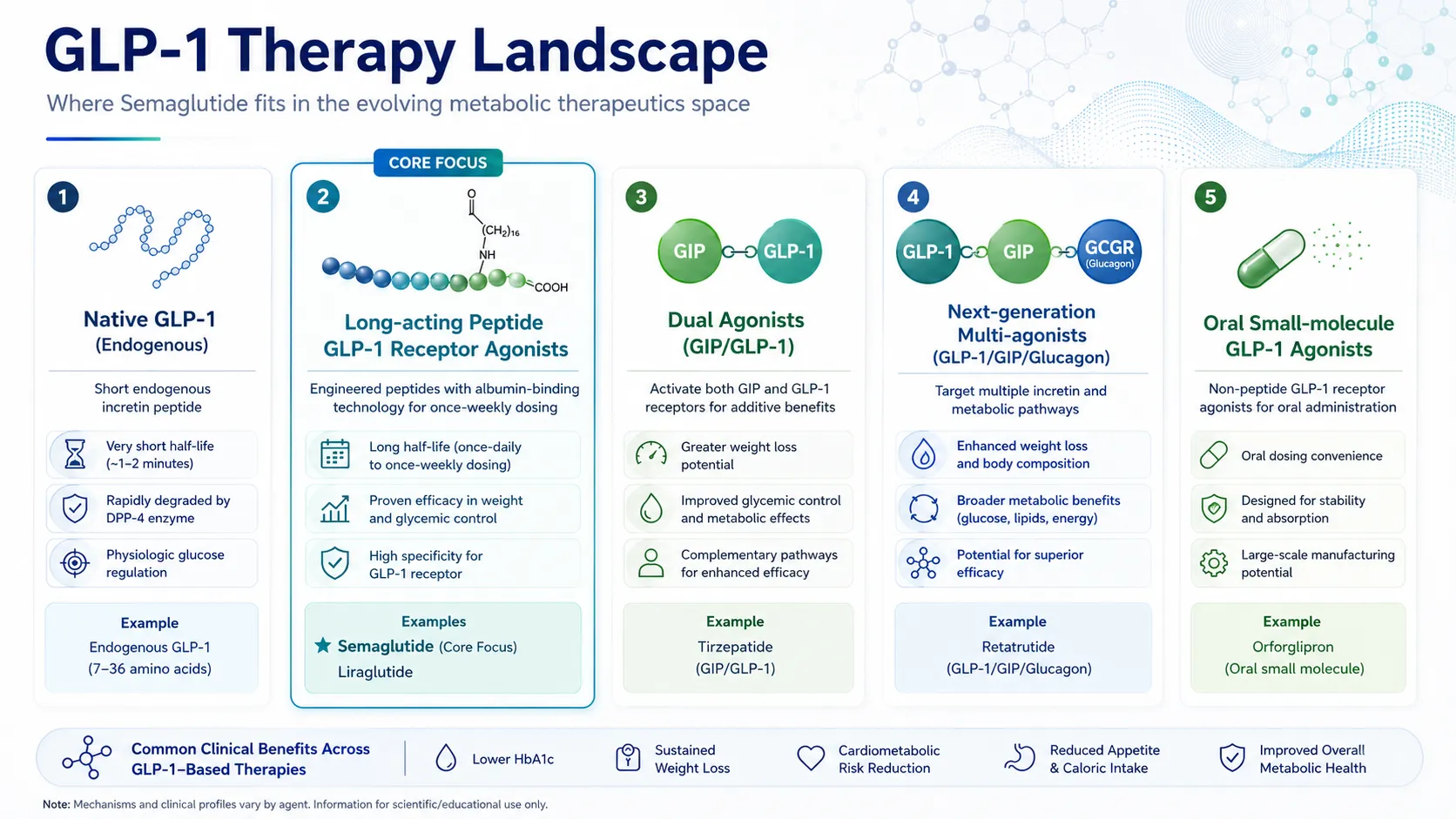
Semaglutide has become one of the most closely watched peptide active pharmaceutical ingredients in the global pharmaceutical industry. As a long-acting glucagon-like peptide-1 receptor agonist, Semaglutide has been developed into both injectable and oral dosage forms, creating sustained interest not only in the finished API itself, but also in its upstream peptide fragments, side-chain building blocks and advanced intermediates.
For pharmaceutical manufacturers, CDMO partners and peptide development teams, Semaglutide is not simply another GLP-1 compound. Its molecular design combines peptide backbone engineering, DPP-4 resistance, albumin-binding side-chain modification and highly controlled downstream purification. These features make the manufacturing of Semaglutide API technically demanding and place significant importance on the quality of critical intermediates used throughout the process.
This article provides a technical overview of Semaglutide API and its representative key intermediates, with emphasis on:
- The structural features that support Semaglutide’s long-acting profile;
- Injectable and oral Semaglutide dosage-form considerations from an API sourcing perspective;
- Synthetic, recombinant and semi-synthetic manufacturing approaches;
- A representative industrial semi-synthetic route;
- Key Semaglutide intermediates and their possible roles in process development;
- Quality attributes pharmaceutical buyers should evaluate when sourcing Semaglutide-related materials.
1. What Is Semaglutide?
Semaglutide is a modified GLP-1 receptor agonist designed to achieve prolonged pharmacological activity compared with native GLP-1. According to FDA product labeling for Semaglutide injection, the peptide backbone is produced by yeast fermentation and is further modified to enhance stability and duration of action. The key structural design elements include:
- Aib substitution at position 8, which improves resistance against degradation by dipeptidyl peptidase-4 (DPP-4);
- Modification at Lys26 with a hydrophilic spacer and a C18 fatty di-acid side chain, which promotes albumin binding and prolongs systemic exposure;
- Amino-acid design supporting controlled selectivity and long-acting GLP-1 receptor agonism.
From a pharmaceutical development standpoint, these molecular modifications make Semaglutide a representative example of a highly engineered peptide API in which backbone integrity, site-selective side-chain attachment and impurity control are central to manufacturing success.
2. Semaglutide API in Injectable and Oral Dosage Forms
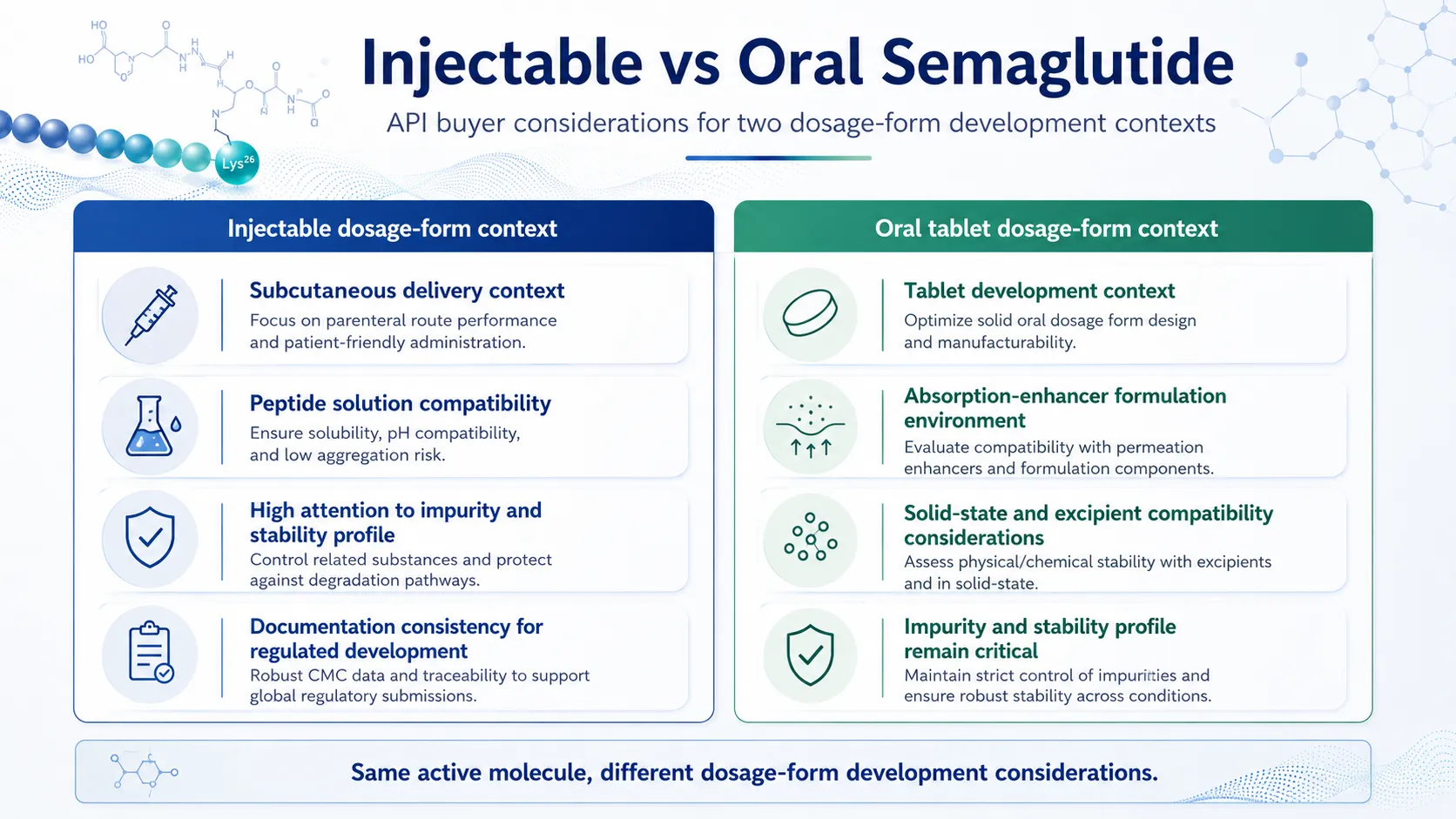
Semaglutide has been commercialized in both subcutaneous injectable and oral tablet dosage forms. FDA labeling confirms the presence of Semaglutide injection products and oral Semaglutide tablets, while oral Semaglutide formulations use absorption-enhancing technology to enable gastrointestinal uptake of a peptide-based active ingredient.
For API buyers and formulation developers, it is important to avoid oversimplifying the distinction as merely “injectable-grade” versus “oral-grade” Semaglutide. The active molecule remains Semaglutide, but different dosage-form development programs may impose different expectations around:
- API impurity profile;
- Residual solvent and reagent control;
- Solid-state handling and formulation compatibility;
- Documentation support for specific regulatory and development contexts;
- Batch-to-batch reproducibility and traceability.
Injectable and oral product strategies therefore share the same fundamental API identity while requiring formulation-specific development and quality consideration at the finished dosage-form stage.
3. Why Semaglutide Manufacturing Is Technically Challenging
Semaglutide manufacturing is challenging because it integrates:
- A long peptide sequence;
- Site-specific modifications;
- Protection and deprotection chemistry;
- Selective acylation at the desired lysine residue;
- Stringent purification requirements;
- Careful control of process-related impurities.
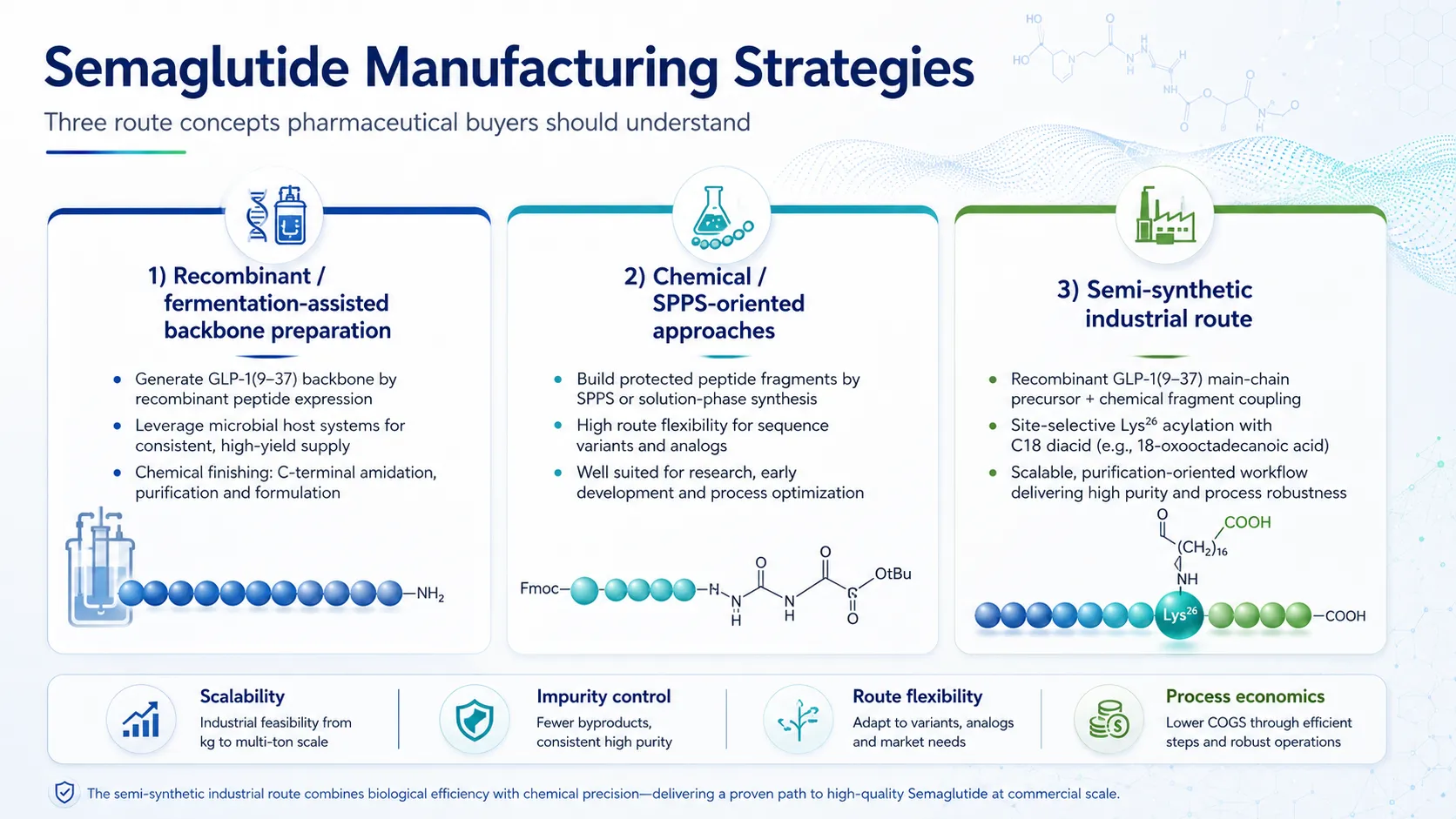
Published studies and patent literature show that Semaglutide may be prepared through multiple strategic approaches, including solid-phase peptide synthesis, liquid-phase or soluble-support-assisted synthesis, and semi-recombinant or semi-synthetic strategies combining biosynthetic peptide backbone generation with chemical modification.
In industrial discussions, semi-synthetic strategies are often of particular interest because they may provide a practical route to balance:
- Peptide sequence control;
- Manufacturing scalability;
- Impurity management;
- Raw material efficiency;
- Cost optimization relative to full-length SPPS-only approaches.
That said, no single public route should be treated as the only acceptable manufacturing strategy. Actual commercial processes remain manufacturer-specific and may be protected by proprietary know-how.
4. Representative Industrial Semi-Synthetic Strategy for Semaglutide API
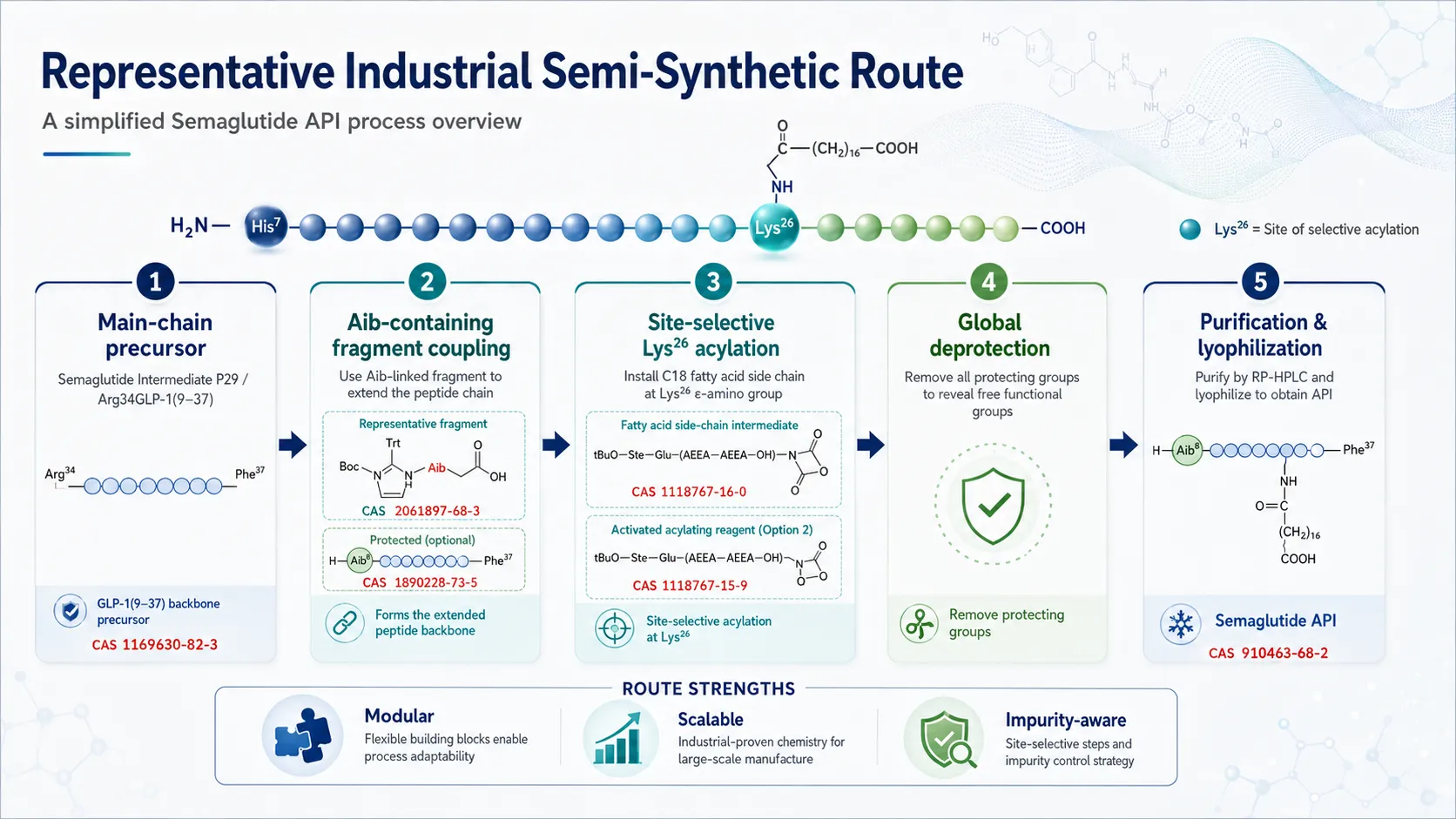
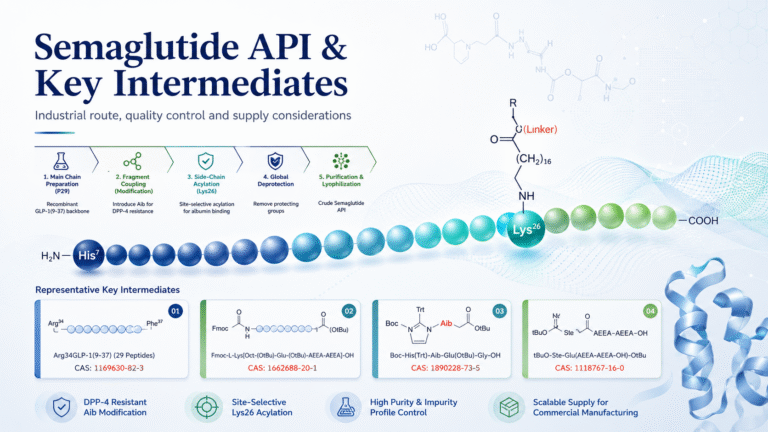
A representative industrial semi-synthetic concept can be described as a modular route built around four major process themes:
- Preparation of a Semaglutide main-chain peptide intermediate;
- Introduction of the Aib-containing N-terminal modification;
- Site-selective Lys26 acylation with a fatty acid side-chain intermediate;
- Global deprotection, purification and lyophilization to obtain Semaglutide API.
This type of strategy is consistent with the broader manufacturing logic described in public literature and process-development studies, where peptide backbone preparation and subsequent chemical modification are combined to construct the final long-acting Semaglutide molecule.
4.1 Step 1: Preparation of the Main-Chain Intermediate
One important intermediate frequently associated with Semaglutide-related process development is:
Semaglutide Intermediate P29 / Arg34GLP-1(9–37)
CAS No.: 1169630-82-3
This peptide fragment can be viewed as a long-chain backbone precursor used in semi-synthetic or fragment-based approaches. In such strategies, the P29-type intermediate serves as a foundation for subsequent N-terminal modification and side-chain attachment steps.
The importance of this intermediate lies in its role as a high-value long peptide precursor, where sequence accuracy, purity and protection-state control may significantly affect downstream coupling performance and final API quality.
4.2 Step 2: N-Terminal Introduction of the Aib-Containing Fragment
Semaglutide contains an Aib substitution associated with enhanced resistance to DPP-4 degradation. FDA labeling identifies modification at position 8 as a stabilizing design feature of Semaglutide.
In modular semi-synthetic approaches, an Aib-containing peptide fragment may be coupled to the main-chain precursor. Depending on the selected fragment strategy, representative building blocks may include:
Boc-His(Trt)-Aib-OH
CAS No.: 2061897-68-3
and/or more extended protected peptide fragments such as:
Boc-His(Trt)-Aib-Glu(OtBu)-Gly-OH
CAS No.: 1890228-73-5
The exact choice of fragment depends on the manufacturer’s route design, coupling strategy, protected-group system and downstream impurity-control plan. From a procurement standpoint, buyers should confirm not only the CAS number and nominal identity, but also the purity, protection pattern, moisture control and route relevance of the selected fragment.
4.3 Step 3: Site-Selective Lys26 Acylation
One of the defining structural features of Semaglutide is the fatty acid side-chain modification associated with prolonged action through albumin binding. FDA labeling states that modification at Lys26 with a hydrophilic spacer and a C18 fatty di-acid contributes to the protraction mechanism of Semaglutide.
In a representative semi-synthetic process, this step may involve a protected fatty acid side-chain intermediate or activated acylating reagent designed to facilitate selective coupling at the target amino functionality.
Representative materials may include:
tBuO-Ste-Glu(AEEA-AEEA-OH)-OtBu
CAS No.: 1118767-16-0
and related activated acylating forms such as:
Activated Fatty Acid Side-Chain Intermediate
CAS No.: 1118767-15-9
The technical challenge in this step is not simply attaching a side chain, but achieving:
- Selective acylation at the intended site;
- Minimal over-acylation;
- Controlled positional isomer formation;
- Consistent downstream deprotection behavior;
- Manageable purification load.
Because site-selective side-chain installation directly affects the molecular identity of Semaglutide, the quality of side-chain intermediates is often a major focus during procurement and route evaluation.
4.4 Step 4: Global Deprotection
After peptide backbone assembly and side-chain installation, the protected intermediate must undergo a deprotection step to remove temporary protecting groups and generate the crude Semaglutide molecule.
This stage may influence:
- Side-product formation;
- Oxidation or deamidation risk;
- Incomplete deprotection impurities;
- Carryover of residual reagents;
- Final downstream purification burden.
Careful process design is needed to ensure that deprotection produces a crude mixture that is practical for final purification and quality control.
4.5 Step 5: Purification
Purification is a critical value-defining step in Semaglutide API manufacturing. Peptide APIs commonly require advanced purification strategies to remove structurally related impurities, deletion sequences, side reaction products and process-derived materials. Published research on Semaglutide preparation and precursor purification confirms the importance of downstream purification in achieving suitable material quality for further processing and final API production.
In a representative industrial context, purification objectives may include removal of:
- Deletion peptides;
- Oxidation-related impurities;
- Deamidation products;
- Positional isomers;
- Incomplete acylation species;
- Double-acylated by-products;
- Residual reagents or side-chain-related carryovers.
4.6 Step 6: Concentration, Sterile Filtration Where Applicable and Lyophilization
Following purification, the final processing sequence may involve concentration, polishing steps, controlled isolation and lyophilization, depending on the desired API presentation and quality strategy.
At this stage, the focus shifts from molecular construction to final API quality consistency, including:
- Appearance;
- Residual moisture;
- Assay;
- Purity;
- Related substances;
- Batch consistency;
- Packaging and storage control.
5. Key Semaglutide Intermediates and Their Roles in Development
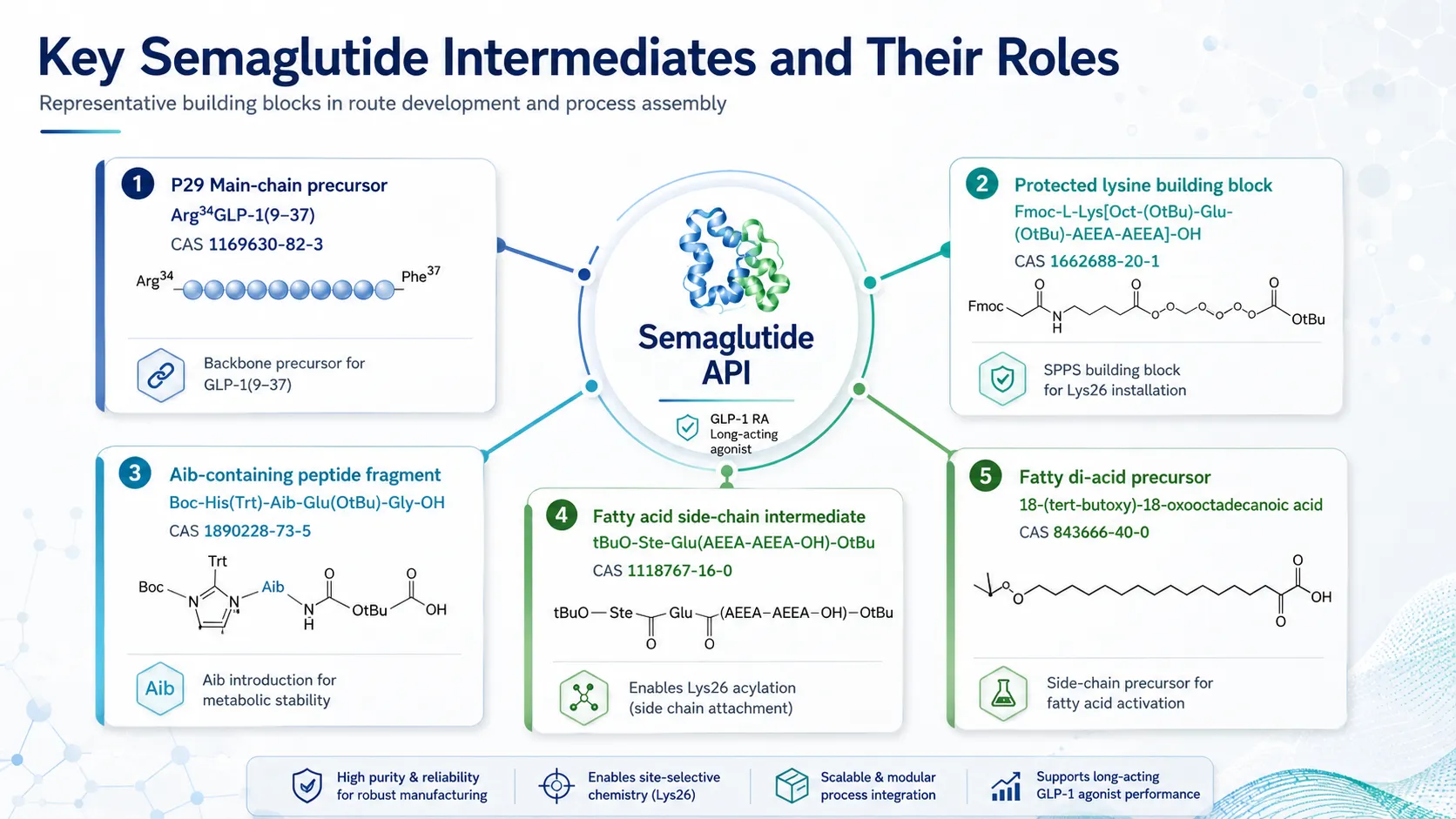
The following table summarizes selected Semaglutide-related intermediates that may be relevant in pharmaceutical route development, semi-synthetic assembly or intermediate procurement discussions.
| Intermediate | CAS No. | Representative Role |
|---|---|---|
| Semaglutide Intermediate P29 / Arg34GLP-1(9–37) | 1169630-82-3 | Long peptide main-chain precursor |
| Fmoc-L-Lys[Oct-(OtBu)-Glu-(OtBu)-AEEA-AEEA]-OH | 1662688-20-1 | Side-chain-related protected lysine building block in SPPS-oriented strategies |
| Boc-His(Trt)-Aib-Glu(OtBu)-Gly-OH | 1890228-73-5 | Aib-containing protected peptide fragment |
| Boc-His(Trt)-Aib-OH | 2061897-68-3 | Aib-containing N-terminal fragment option |
| tBuO-Ste-Glu(AEEA-AEEA-OH)-OtBu | 1118767-16-0 | Fatty acid side-chain intermediate |
| Activated fatty acid side-chain intermediate | 1118767-15-9 | Activated acylation-related intermediate |
| 18-(tert-butoxy)-18-oxooctadecanoic acid | 843666-40-0 | Fatty di-acid precursor / side-chain-related building block |
These intermediates should not be interpreted as a single universal manufacturing route. Rather, they represent important building blocks and process-relevant materials that may appear in different Semaglutide development or production strategies, including SPPS-based, fragment-condensation and semi-synthetic frameworks.
6. Synthetic, Fermentation-Assisted and Semi-Synthetic Approaches: What Buyers Should Understand
A common question in Semaglutide sourcing is whether the material is “synthetic” or “fermentation-based.” In practice, the answer depends on which part of the process is being discussed.
6.1 Recombinant / Fermentation-Assisted Peptide Backbone Preparation
FDA labeling for Semaglutide injection states that the peptide backbone is produced by yeast fermentation. This confirms the industrial relevance of recombinant production for the peptide backbone in at least one commercial context.
Published and patent sources also describe recombinant or semi-recombinant preparation of Semaglutide precursors, supporting the broader industry concept of biosynthetic backbone generation followed by chemical finishing steps.
6.2 Chemical and SPPS-Based Approaches
Alternative research and process development studies describe Semaglutide preparation through peptide synthesis methods, including solid-phase peptide synthesis, liquid-phase synthetic strategies and soluble-support-assisted approaches.
These approaches may be useful in:
- Research-scale synthesis;
- Route development;
- Specific protected-fragment strategies;
- Certain intermediate preparations.
6.3 Semi-Synthetic Strategies
Semi-synthetic routes combine elements of peptide precursor generation, fragment assembly, chemical acylation and downstream purification. These approaches are attractive because they may offer a practical balance between:
- Route flexibility;
- Scale-up potential;
- Intermediate sourcing modularity;
- Impurity management;
- Manufacturing economics.
For pharmaceutical buyers, the key lesson is that the manufacturing route behind Semaglutide API or intermediates matters, because it can influence impurity profiles, documentation expectations and supply consistency.
7. Critical Quality Attributes for Semaglutide API and Intermediates
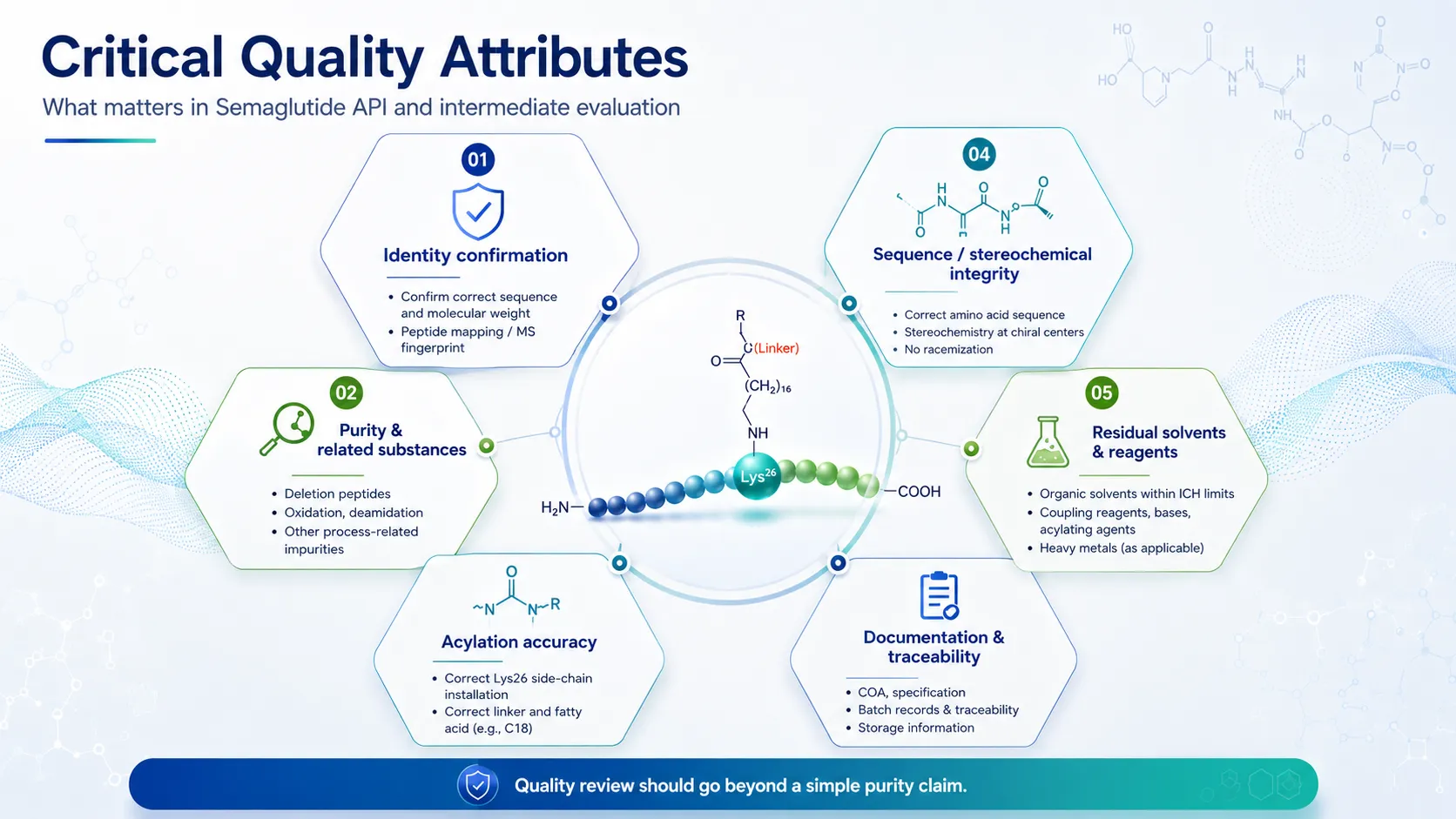
For buyers evaluating Semaglutide API or Semaglutide intermediates, quality discussion should go beyond a simple “purity ≥ 98%” statement. The following attributes are often more meaningful in actual technical assessment.
7.1 Identity Confirmation
Appropriate identity testing should establish that the material matches the expected structure and protection state where applicable. Depending on the material type, this may include chromatographic, spectrometric or other orthogonal analytical confirmation.
7.2 Purity and Related Substances
For peptide intermediates and APIs, the impurity profile can be more important than headline purity alone. Buyers may need to consider:
- Deletion sequences;
- Truncated peptide impurities;
- Oxidized species;
- Deamidated species;
- Mis-acylated species;
- Residual protected forms;
- Positional isomers.
Published Semaglutide process-development literature repeatedly emphasizes the complexity of purification and impurity management in peptide manufacturing.
7.3 Acylation Accuracy and Side-Chain Integrity
For Semaglutide-related advanced intermediates and API, the correctness of the side-chain installation is crucial. This includes:
- Intended acylation position;
- Absence or control of over-acylated species;
- Linker integrity;
- Correct relationship between fatty side chain and peptide backbone.
Because Lys26 modification is central to the molecular design of Semaglutide, this area is particularly important during analytical review.
7.4 Stereochemical and Sequence Integrity
Peptide intermediates must maintain the intended amino-acid sequence and stereochemistry. For protected amino-acid or peptide fragments, route developers may assess:
- Chiral purity;
- Sequence correctness;
- Side-chain protection pattern;
- Hydrolysis or degradation risk.
7.5 Residual Solvents and Reagents
Residual solvent control is important for API and intermediate qualification, particularly when the material is intended for regulated pharmaceutical development. Depending on the manufacturing route, buyers may also evaluate potential residual coupling reagents, scavengers or deprotection-related carryovers.
7.6 Documentation and Traceability
A supplier’s ability to provide suitable documentation is often as important as the physical sample itself. Commonly requested materials may include:
- COA;
- Specification;
- MSDS / SDS;
- TDS where applicable;
- Packaging information;
- Storage conditions;
- Available analytical method information;
- Batch-related documentation depending on project stage.
The depth of documentation usually depends on whether the project is at early research, process development, scale-up or registration-related evaluation stage.
8. What Pharmaceutical Buyers Should Evaluate When Sourcing Semaglutide Intermediates
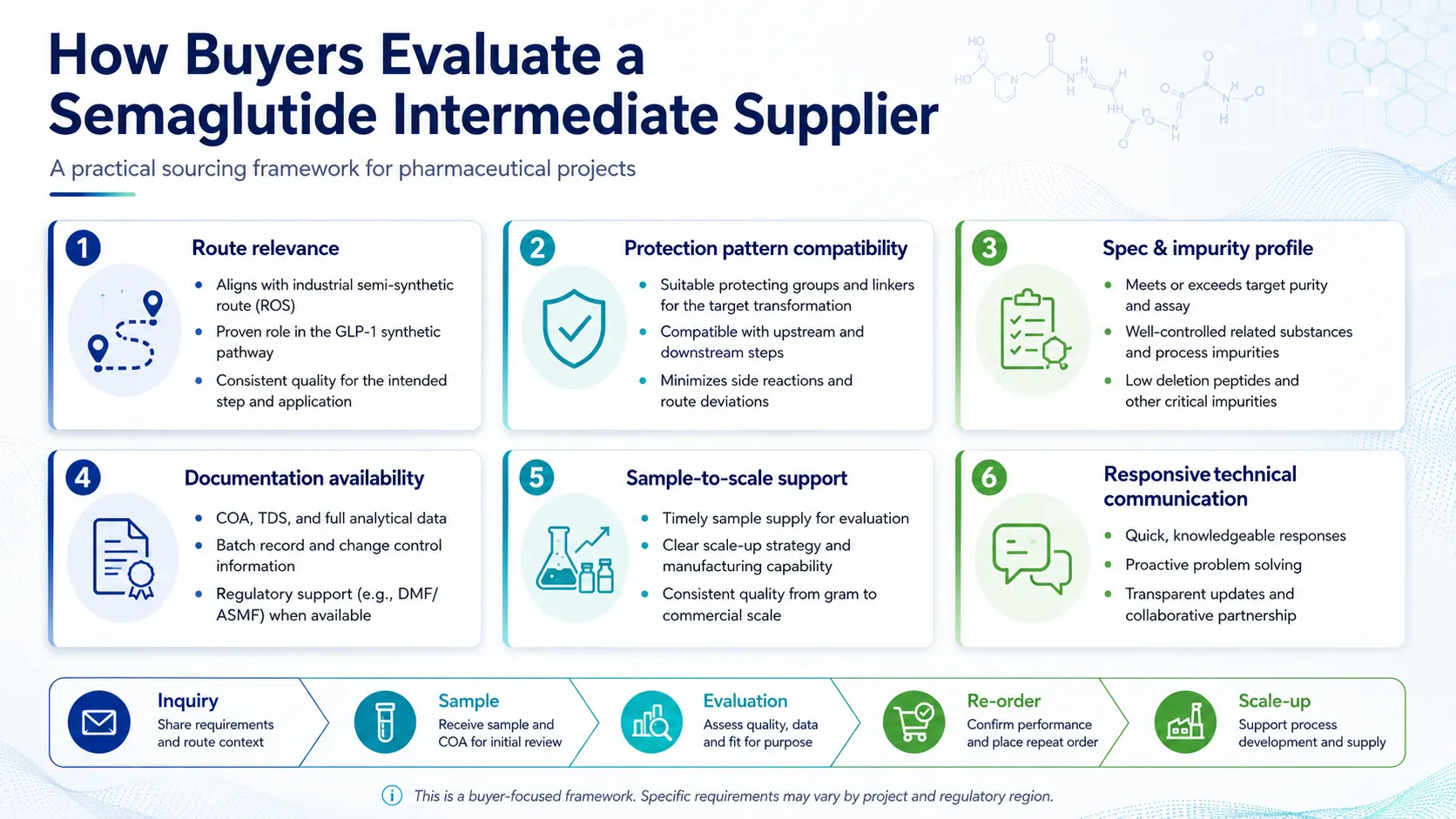
When selecting a Semaglutide intermediate supplier, buyers should assess more than price and nominal CAS number. A technically meaningful supplier review may include the following points.
8.1 Is the Intermediate Relevant to the Buyer’s Route?
A material may be chemically related to Semaglutide yet not suitable for every process route. Buyers should confirm whether the intermediate is:
- Designed for SPPS;
- Designed for fragment coupling;
- Designed for semi-synthetic peptide assembly;
- Suitable for a particular side-chain attachment strategy.
8.2 Is the Protection Pattern Compatible?
For protected fragments and side-chain building blocks, the exact protection pattern can directly influence compatibility with the buyer’s process.
8.3 Is the Supplier Able to Explain the Material’s Role?
A credible supplier should be able to explain whether a material is:
- A main-chain intermediate;
- An Aib-containing fragment;
- A side-chain acylation intermediate;
- A precursor for downstream fragment assembly.
This does not require disclosure of confidential process know-how, but it does require a clear technical understanding of the product’s function.
8.4 Are Supporting Documents Available?
Early-stage buyers may start with specification and COA review. Later-stage buyers may require additional traceability, batch consistency data or manufacturing support information depending on project progression.
8.5 Can the Supplier Support Sample-to-Scale Communication?
In many pharmaceutical development projects, a buyer first requests:
- Technical confirmation;
- Small sample;
- Trial evaluation;
- Re-order;
- Scale-up quotation.
A responsive supplier should be able to support this progression with clear communication and realistic lead-time expectations.
9. Selected Semaglutide API and Intermediate Supply Support from Ureda
Huzhou Ureda Pharmaceutical Co., Ltd. focuses on selected pharmaceutical raw materials, GLP-1-related APIs and advanced intermediates for global B2B customers.
For Semaglutide-related inquiries, Ureda can support discussions involving selected materials such as:
- Semaglutide API
CAS No.: 910463-68-2 - Semaglutide Intermediate P29 / Arg34GLP-1(9–37)
CAS No.: 1169630-82-3 - Fmoc-L-Lys[Oct-(OtBu)-Glu-(OtBu)-AEEA-AEEA]-OH
CAS No.: 1662688-20-1 - Boc-His(Trt)-Aib-Glu(OtBu)-Gly-OH
CAS No.: 1890228-73-5 - Boc-His(Trt)-Aib-OH
CAS No.: 2061897-68-3 - tBuO-Ste-Glu(AEEA-AEEA-OH)-OtBu
CAS No.: 1118767-16-0 - Other Semaglutide-related peptide fragments and side-chain building blocks upon project discussion.
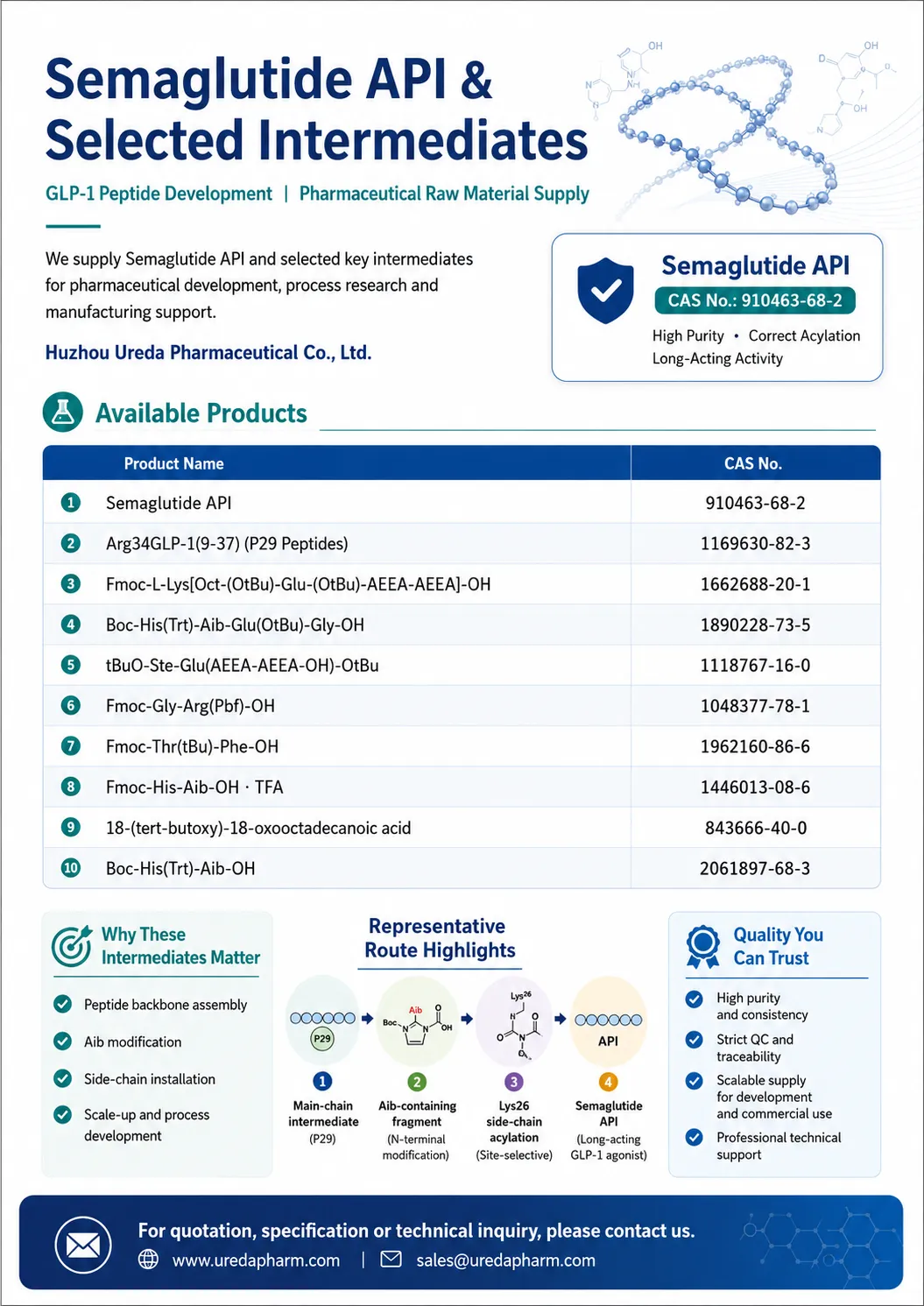
Available support may include specification review, COA sharing where appropriate, packaging information, sample inquiry coordination and quotation support for qualified pharmaceutical customers.
10. Frequently Asked Questions
FAQ 1: Is Semaglutide only used in injectable formulations?
No. Semaglutide has been developed into both injectable and oral tablet dosage forms. FDA labeling confirms marketed Semaglutide injection and oral tablet products.
FAQ 2: Is Semaglutide manufactured by fermentation or chemical synthesis?
Commercially relevant Semaglutide manufacturing may involve recombinant or fermentation-assisted peptide backbone preparation, while public studies also describe fully synthetic, liquid-phase and semi-synthetic strategies. The selected manufacturing route can affect cost structure, impurity control and supply strategy.
FAQ 3: What is Semaglutide Intermediate P29?
Semaglutide Intermediate P29, commonly associated with Arg34GLP-1(9–37) and CAS 1169630-82-3, is a long peptide precursor discussed in Semaglutide-related route development and semi-synthetic manufacturing concepts.
FAQ 4: Why are side-chain intermediates important in Semaglutide synthesis?
Semaglutide contains a fatty acid side-chain modification associated with albumin binding and prolonged pharmacological activity. Side-chain intermediates are therefore critical for achieving the desired site-selective modification during API construction.
FAQ 5: What should buyers check when sourcing Semaglutide intermediates?
Buyers should evaluate:
- CAS number and structural identity;
- Protection pattern;
- Route relevance;
- Purity and impurity profile;
- Documentation availability;
- Supplier response speed and technical communication;
- Sample and scale-up support.
Conclusion
Semaglutide API manufacturing represents a technically demanding combination of peptide backbone engineering, side-chain chemistry, selective acylation and high-level purification. As global interest in GLP-1-based therapies continues to expand, demand for reliable Semaglutide APIs, peptide precursors and process-relevant intermediates remains a critical topic for pharmaceutical developers and manufacturers.
For buyers, the value of a Semaglutide intermediate supplier lies not only in offering a product name or CAS number, but in demonstrating understanding of:
- The material’s role in route development;
- The relevance of protection patterns and fragment design;
- The importance of site-selective acylation;
- The need for impurity control and document readiness;
- The transition from laboratory-scale evaluation to project-oriented supply.
Contact CTA
Looking for Semaglutide API or Key Intermediates?
Huzhou Ureda Pharmaceutical Co., Ltd. supports selected GLP-1 APIs and advanced intermediates for pharmaceutical development and manufacturing projects.
For product specification, COA availability, quotation or technical inquiry, please contact:
Huzhou Ureda Pharmaceutical Co., Ltd.
Email: sales@uredapharm.com
Website: www.uredapharm.com
WhatsApp: +86-13867276965